
Pakistan urgently needs a new IMF programme. It is also crying out for immediate economic reforms. The nation sits on a cliff edge in danger of a fall into a debt restructuring. We have a new government but are they up to the task? Coalition governments often make poor economic decisions as they try to play to their supporters on both sides. Pakistan has no time for that now. A single, strong cohesive policy approach must now be agreed and implemented. We see no clear signs yet that this cabinet will be up to the job but … some stars are beginning to shine.
Election. As we anticipated, the elections were neither transparent nor did they install a government that the majority voted for. Candidates from Imran Khan’s banned political party, Pakistan Tehreek-e-Insaf (PTI), won the biggest number of seats but, as many were forced to run as independents, they could not form a government. Instead, as we predicted, three-time former Prime Minister Nawaz Sharif claimed victory but admitted that his party did not have the “majority to form a government” as he started looking for coalition partners. An alliance between the PMN-L and the Pakistan People’s Party (PPP) has since been formed. There is mounting evidence that the elections were rigged at the behest of the military but, unsurprisingly, whilst almost no one is openly acknowledging that elephant in the room, nonetheless a few fingers are now slowly beginning to point to it.
Opposition. Imran Khan remains in prison having spent the last nine months behind bars. “I will remain in jail if I have to for nine more years, or more, but I will never strike a deal with those who have enslaved my nation.” Khan said in a statement after the coalition was announced and just after PTI leader Shehryar Afridi claimed that his party would have talks but not with the PMN-L or the PPP who he dismissed as a “rejected lot“. Instead, Afridi said the party would meet with the Army Chief General Asim Munir. Khan has very famously and publicly fallen out with the military so it is difficult to see him sitting down at a negotiation table with them. This will greatly impact his chances of charges against him being revoked or dismissed.
Legals. Since Khan’s message, a court in Islamabad has ‘banned’ him and his wife, Bushra Bibi, from making public statements that criticize or defame state institutions and officials in an upcoming trial – including anything about the army, judiciary, and the army chief. This clearly shows a deepening political crisis as the military just cannot seem to stop themselves from pulling strings. In March, six of the Islamabad High Court’s eight justices penned a strong letter alleging that the nation’s top intelligence agency had used coercive tactics to put pressure on justices to make favourable judgements. The justices claim they were forced to hear a case against Khan even though they had already ruled it did not meet the legal provisions required to merit adjudication. Although the release of the letter does not point to an open rebellion in the Court, it does shine a light on just how deeply involved the military are in who is really in charge. Without a compliant court, Sharif would not be in charge today. The letter does not change that, but it does mean the military should perhaps be a little more subtle in their manipulations. We will now watch the Supreme Court, which is expected to imminently resume hearing a case on judicial interference. The people cannot seem to overturn the army so perhaps the people’s court can? We highly doubt it but we will applaud them if they try.
Iran. Iran’s President Ebrahim Raisi made a three-day visit to Pakistan in April. He met with Prime Minister Shehbaz Sharif. The pair discussed security and economic cooperation – obviously aimed at smoothing over the recent diplomatic rift between the two nations. Both men also reconfirmed their condemnation of Israel’s assault on Gaza. Raisi’s trip came after Iran’s strikes on Israel. Pakistan’s army Chief General, Asim Munir also had talks with Raisa. In a statement he said the discussions revolved around “matters of mutual interest, notably regional peace, stability and border security.” Not everyone is happy about the improved relations however. The United States has warned Pakistan of the risk of sanctions should it begin to get too friendly with its neighbour. This warning comes after the USA, and the UK, tightened sanctions on Iran after their attack on Israel. This puts Pakistan in a bit of a pickle. It desperately needs help to end its economic crisis and trading next door is a good start, but it risks the ire of allies like the USA. It can, however, be used to Pakistan’s favour if it asks Washington, ‘if not Iran then who?’ This may be enough to loosen American purse strings and put some much-needed cash on the table.
Despite the dark political clouds, we see a glimmer of light on the horizon.
Numbers. Now we have a new government installed it must quickly get to work. Pakistan’s vicious economic cycle is now unsustainable. Inflation, which had peaked at 38% last year, still floats stubbornly in the mid to high 20’s. Foreign currency reserves are only a paltry USD7.8 billion, enough to cover just over seven weeks’ imports. The man tasked with fixing all of this is Muhammad Aurangzeb who has been appointed Finance Minister. Aurangzeb is a political outsider and a veteran banker and this may work in his favour. His previous profession combined with his lack of political allegiances should allow him to push through painful but necessary economic policies without the usual lobbying and peer pressure. His understanding of the macroeconomic balance required to implement long term solutions could be crucial. He formerly headed one of the country’s biggest commercial banks, Habib Bank Limited, prior to that he worked with international institutions like JP Morgan and Citibank which must surely have armed him with strong knowledge of both domestic and international financial markets. We feel he is the best man for the job, at this time. What remains to be seen is if he will be allowed to work to the best of his abilities. In the past, often the people holding his position have applied a band aid on a broken arm approach to the country’s financial woes. We anticipate Aurangzeb will come at things differently. We expect him to immediately begin to build the foundations for long term economic reforms. It will not be quick and it will definitely not be pretty, but it will absolutely be an approach previously untried in the country.
Loans. The IMF board will meet in early May to decide on a USD1.1 billion bailout for the country. The meeting will discuss thedisbursement of the second and final tranche of a USD3 billion standby arrangement made with Islamabad last year which allowed it to narrowly avoid a sovereign default. Even so, Pakistan remains in a payment crisis. From 1st July, it needs USD24 billion to service debt payments and interest, a sum over three times greater than the national foreign currency reserves. So on top of his work fixing his extremely broken economy, one of Aurangzeb’s first tasks will also be to negotiate a new loan agreement. We expect him to take a reform-based approach to his sales pitch and not the normally seen political balancing act. If we are right, the IMF will look more favourably about getting their chequebook out, again, and Pakistan will win some breathing space while its economy stabilises, finds its new normal and Aurangzeb forces through the changes needed to pull the country out of the mire.
Expat Attacks. On 26th March, six people, including five Chinese nationals, were killed when a suicide bomber targeted the vehicle convoy they were travelling in. The vehicles had been on a road in Besham in Khyber Pakhtunkhwa Province. The vehicles were transporting employees of the Dasu hydroelectric dam project. On 19th April, a suicide bomber targeted a van carrying Japanese nationals travelling to work at Pakistan Suzuki Motors in Karachi. Two bystanders were injured in the incident. No group has claimed responsibility. In response to these incidents, the Interior Ministry has announced the formation of a special security unit to protect foreigners in the country but it has yet to issue details.
Other Attacks. On 21st March, a bomb detonated by an army convoy on the Dera Ismail Khan-Tank Road in Hathala, Khyber Pakhtunkhwa. Two military personnel were killed with twelve more injured.On 7th April, an explosive device detonated in Khuzdar in Balochistan Province. The device had been attached to a motorcycle parked in a busy area of the city. At least two people were killed and five more injured in the blast. No group has claimed responsibility. On 13th April, gunmen attacked a bus on a road near Naushki in Balochistan. The assailants stopped the bus, separated migrant workers from Punjab Province and shot them. Nine were killed. The militants later fired on a vehicle belonging to a local legislator killing the driver and one passenger. The legislator was not in the car at the time of the attack.
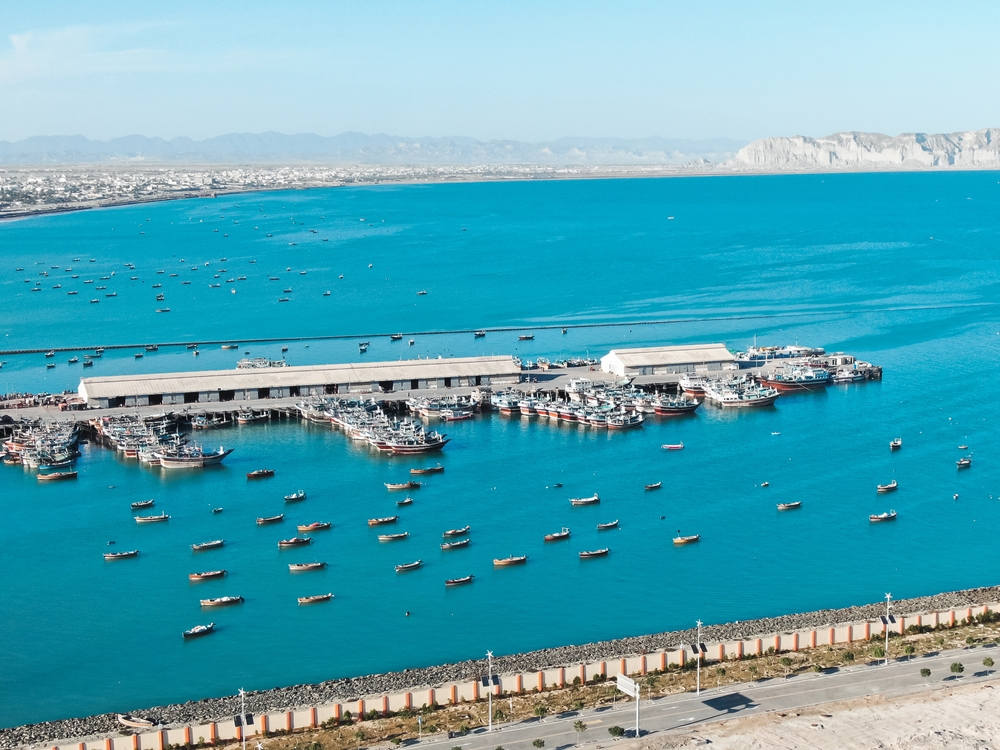
BLA. On 26th March, the Balochistan Liberation Army’s (BLA’s) Majeed Brigade attacked PNS Siddique, the second biggest naval base in Pakistan and also the home of Turbat International Airport. Heavy gunfire between the militants and security officers was reported and six insurgents have been confirmed killed. One soldier also died in the exchange. The Chief Minister of Balochistan, Sarfraz Bugti, condemned the attack. On 20th March, the BLA also targeted the Gwadar Port Authority Complex. Eight armed men were killed when they tried to invade the facility. Bugti also took to ‘X’ to tweet his support of security forces. The BLA is the largest armed group operating in Balochistan with an active membership reported to number thousands. It is allied with the Baloch Liberation Front making it a formidable fighting force. Last year, Baluch militants carried out 110 attacks.
Terrorism. Aside from the BLA, Pakistan is dealing with a huge surge in terror activity. The three biggest perpetrators are Tehreek-e-Taliban Pakistan (TTP), Islamic State-Khorasan (IS-K), and the BLA. The Pakistan Institute of Peace Studies (PAKPIPS) reports that the country “witnessed a phenomenal 65% increase in terrorism-related fatalities in 2023.” PAKPIPS say the three groups listed are to blame for 82% of them. A total of 306 terrorist attacks took place in Pakistan in 2023 – including 23 suicide bombings that killed 693 people and injured 1,124 more. Everything points to the Taliban takeover of neighbouring Afghanistan for the boosted capabilities of armed groups in Pakistan, and particularly in Baluchistan. Weapons and equipment left in Afghanistan after NATO forces withdrew in 2021 are now resurfacing in BLA hands and that suggests that the violence levels and frequency of attacks will not decrease in the near future.
Without Khan, the new parliament and government have little legitimacy or stability. A split national assembly and weak government will play into the military’s hands. And so, predictably, the country for now, remains a military controlled state. Even so, we are seeing small signals from the new government that it is committed to introducing economic reforms but it must also address the nation’s security problems too. Pakistan will remain a challenging environment both physically and financially for the foreseeable future. Small improvements may be made moving forward but the country is now so badly broken it will take years if not decades to fix. So much potential has been squandered so quickly.