
This is the summer of sport. World leaders headed to Paris for the Olympic Games and were filmed sitting in the rain looking less than impressed with the festivities. President Tokayev, however, chose to stay home and dry. His office said his “working schedule… does not provide for his participation”. This is a good cover story in these most interesting of times and we are sure his time will have been well spent however … His decision not to attend the games was a perfect example of his artful ability to balance international connections while staying well away from stormy international friction. He will continue to leverage his unique position as the middle man between the West, Russia, and China.
SCO. Washington hosted the NATO Summit in July. Kazakhstan hosted the Shanghai Cooperation Organization Summit.Each organisation is comprised of major powers and loosely allied neighbours. Both organisations conduct joint military exercises. That however is where the similarity ends. At this year’s SCO meeting, Russian President Putin and Chinese President Xi Jinping were both in attendance. The summit was titled “Strengthening Multilateral Dialogue — Striving Towards a Sustainable Peace and Prosperity.” Some question the existence of the SCO saying it lacks the necessary strength to tackle security threats in the region when compared to NATO. We do not view it that way, in fact we do not see that as being its primary role in these turbulent times. The SCO has a much more important job than that. As Russia and China jockey for dominance not only in Central Asia but further afield, the SCO plays a principal role in keeping things balanced between the two superpowers. There are, of course, other players around the table. Iran, India, Pakistan, Kazakhstan, Kyrgyzstan, Tajikistan, and Uzbekistan are also members while 14
other countries including Egypt, Turkey and Saudi Arabia are included as dialogue partners. All in, the SCO covers 29% of the earth’s surface and is home to 42% of the world population. The SCO unites the Turkic countries in the region in a way that no other organisation could, and Kazakhstan is the key to encouraging cooperation between those member nations. Like Kazakhstan, many of them are open to Western investment and involvement. The SCO allows them to pursue those goals while maintaining amicable relations with both China and Russia. When the NATO summit ended, its declaration was strongly worded and almost insulting towards all those it classed as rivals. The SCO’s declaration could not have been more different; “Tectonic shifts are underway in global politics, economy and other spheres of international relations. A fairer multipolar world order is being born, with broader opportunities for national development and mutually beneficial and equal international cooperation. At the same time, we see broader use of force, regular violations of international law, growing geopolitical confrontation and conflicts and increasing risks to stability and peace in the SCO region.” Whilst, overtly, such words play well to the ears of the masses, it is easy to read between the lines and see where the thinly veiled barbs were aimed – at the legacy structures of Bretton Woods, and all other economic and political systems that help to sustain Western dominance and facilitate the West’s ability to apply sanctions or intervene militarily as it chooses. Undermining the structures that underpin the West’s power will go a long way toward aiding Russia in its strategic depth aims, and China in the longed-for reunification of Taiwan. The SCO was originally formed as a defensive alliance of countries, a role it still fills but at the same time it has morphed into a major diplomatic force. It is for this reason that the SCO will
continue to play a big part not only in regional security policies but international ambitions. And it is for this reason that Kazakhstan will seek to continue to be a major player within its ranks.
Russia. The Central Securities Depository has instructed all brokers and management companies to divest themselves of Russian securities. The deadline for compliance is 10th August. The order was issued to adhere to US sanctions imposed on the Moscow Stock Exchange and is one more blow to relations with Moscow. Kazakhstan is struggling to stay on the right side of sanctions and is being watched closely by both the US and the EU. It is clear to see why the West are imposing the restrictions but it is also becoming clear that Kazakhstan should be allowed some leeway on how strongly they are enforced. The country has unique geopolitical challenges purely due to its proximity with Russia, add in the economic ties with its next-door neighbour and that is a lot of knots to untie. As the Russian war in Ukraine grinds on, NATO has pledged “long-term … immediate and enduring support to Ukraine” and has also declared “Ukraine’s future is in NATO.” Whenever Ukraine does indeed join, NATO may need a friend who has the ear of Putin. Kazakhstan will continue to stay on the correct side of existing sanctions but may begin to gently push back in order to sustain friendly relations with Moscow. It has the diplomatic power and position to do so, and the West would be wise to facilitate it for the longer term.
Numbers. The economy continues to show steady growth. Increasing by 3.7% in the 1st quarter of this year the sectors doing particularly well include manufacturing, construction, and services. We see the first two of these sectors being major contributors to growth for the rest of 2024. Construction, in particular, received a massive boost from government contracts aimed at restoring damaged homes, facilities and infrastructure lost in recent floods. Annual inflation is at 8.4% but is heading in the right direction towards the government’s goal of 5% by year end. However, it will remain vulnerable to global food prices which could lead to some volatility. Base interest rates have been cut by 25 basis points to 14.25%. Rates will be re-reviewed late August.
Energy. Germany has announced an energy policy shift that is great news for Kazakhstan but bad news for Russia. Berlin has announced plans to switch away from traditional fossil fuels and focus on renewable hydrogen instead; a commodity Kazakhstan will be in pole position to supply. Work has already begun in this area, and could soon see Kazakhstan emerge as a major exporter of hydrogen energy. The Hyrasia project’s goal is to produce 2 million tonnes of green hydrogen annually by 2032. Given the nation’s experience in the energy sector this will be easily achieved. Germany will adapt existing infrastructure to hydrogen, away from natural gas and its previous reliance on Russia, with plans to import up to 70% of its hydrogen needs by 2030. At the COP27 meeting in 2022, Kazakhstan signed a memorandum of understanding with the EU pledging cooperation on green hydrogen and critical raw materials. As more countries look for cleaner energy sources there is significant opportunity for Kazakhstan. However, it also flags up a few challenges too. Transportation capacity issues and greater investment must be high on Astana’s agenda to ease deployment. Water management, a key component of green hydrogen production, and renewable electricity supplies must also be considered. We do not see these being major issues however. As the world shifts to combat climate change and away from reliance on Russia, international cooperation, particularly with the EU, is all but guaranteed. Already, The Asian Development Bank and Kazakhstan have signed a Hydropower Development Programme agreement. The Alakol, Irtysh Zaisan and Balkhash basins all have significant hydro energy potential. Anticipate these regions to be top of the list for future construction of hydropower plants.C.
Currency. The National Bank of Kazakhstan (NBK) has begun the second phase of its central bank digital currency (CBDC) pilot programme. This time the main focus is how the digital Tenge could be used to reduce corruption in public spending. Areas of particular focus will be agriculture, construction, and direct financial support. The NBK has also announced that CBDC will be used to pay construction contractors currently working on a new railway to the Chinese border. Work on the project began in November 2022. It is expected to be complete in 2025. The People’s Bank of China and NBK had already established a strategic partnership earlier in July aimed to improve research and training in CBDC. As the digital currency roll out continues, bonds between the two nations will strengthen further.
Crypto. The Astana International Financial Centre (AIFC) will collaborate with QazPost to enhance fiat gateways for digital assets. This move will expand access to digital finance across the country and will boost market security. Only digital currencies listed on the Astana International Financial Centre (AIFC) Table of Digital Assets will be included. The inclusion of QazPost will greatly boost accessibility to the crypto asset market by providing increased points of transaction via QazPost’s existing infrastructure and will push the country closer to its goal of becoming a global crypto hub.
Kazakhstan is clamping down on extremism. Unlike neighbouring Afghanistan and Tajikistan for example, it has largely avoided having to deal with Islamic radicals and it is keen to ensure things stay that way. The government has given the Committee for National Security (KNB) additional powers which allows it to monitor the internet. Of particular interest to the KNB are online recruitment campaigns by both domestic and foreign militant groups. The KNB has already detained more than 30 people since the beginning of this year. This is not a large number but it is more than before. The numbers convicted for extremist or terror related charges are also low but, again, higher than seen in previous years. The government is taking proactive steps to ensure the numbers do not escalate, but it must do so carefully. It is becoming obvious that it is a growing problem, albeit at a slower pace than seen in other countries. So far, Tokayev, and his team, have applied his trademark softly, softly approach to dealing with potential radicalisation. For now, this appears to be working and is neutralising the threats as they are identified. However, if Tokayev is talked into taking more severe measures there is the very real risk of driving the groups he most seeks to eliminate underground.
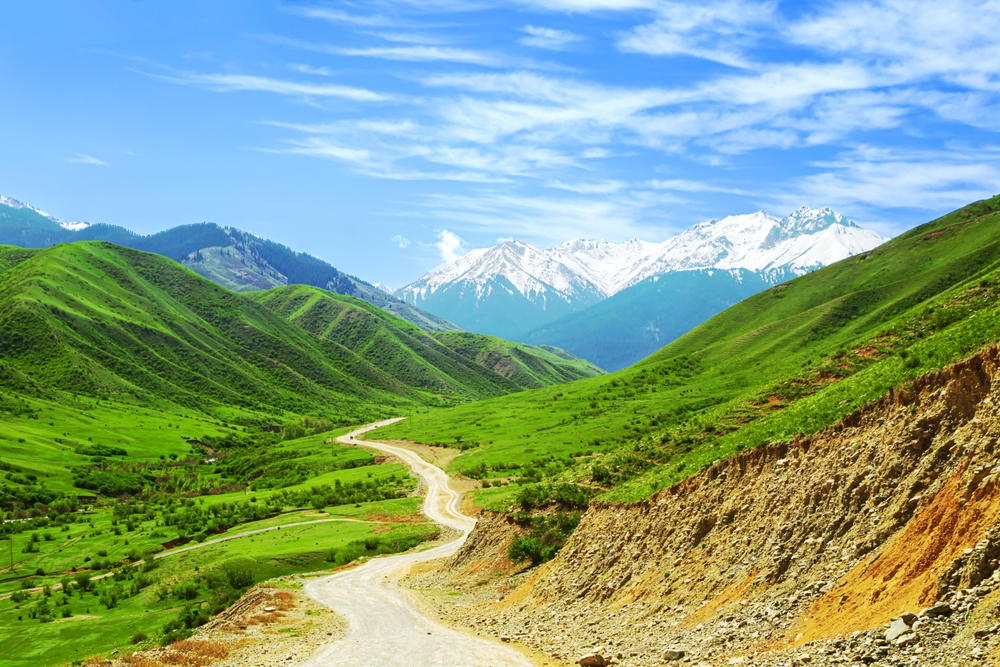
Kazakhstan does not have the luxury of NATO protection should it ever be required yet it will manage to defend itself. Tokayev’s skilful use of multi-faceted diplomatic policies assures that. His chosen route will be the winding one which will connect him with all sides but align him with none. Kazakhstan shares borders with two major super powers. Both have huge regional ambitions. Where Tokayev sits right now he is in the perfect position to cherry pick the best fruit from either side. The West too will offer sweet things as it needs a trusted and stable partner in the region. Tokayev’s commendable efforts to improve and expand diplomatic ties with both East and Western nations has perfectly positioned him as the number one choice in the region for a natural leader, major player, trusted mediator, and economic partner.