
President Sisi’s patience and diplomatic skills are being sorely tested. Israel appears intent on pushing every last one of his buttons to see just how far they can go. It is in Egypt’s interest to bring peace to Gaza. Revenue, growth, and stability depend on it, but Israel is making it difficult for some to keep that goal in sight. Sisi’s restraint must be applauded. His position in the region has never been more prominent than it is now. International leaders know that he is just about the only thing holding the entire region together. If Sisi blinks, the Arab world will blink with him. His strongman skills are now absolutely crucial and his use of them will be crucial moving forward.
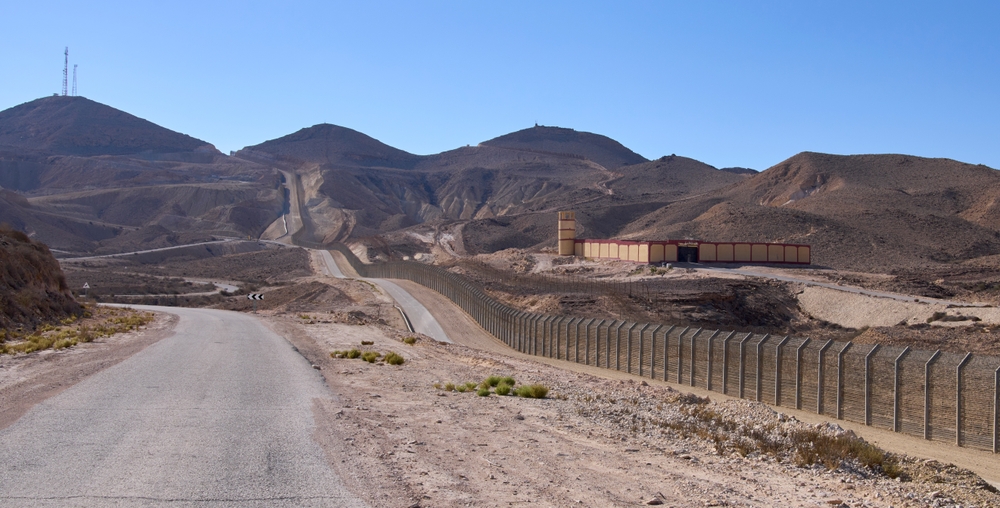
Gaza. Israel continues to expand its incursion into Rafah, and has seized more of the Philadelphi Corridor as it openly thumbs its nose at the Camp David treaty prohibiting it from doing so. At the time of writing, Israel sits only three kilometres from the Rafah coast putting it in control of almost 75% of the corridor with its tanks in the centre of the city. On 24th May, Sisi had a call with President Biden. The pair agreed to collaborate to allow United Nations aid through the Karem Abu Salem (AKA Kerem Shalom) and work together to push Israel to allow the Rafah crossing to reopen. Israel seized the Palestinian side of the Rafah border crossing on 6th May after launching a hugely criticised aerial and ground offensive in a region it had previously ordered thousands of displace Palestinians to shelter in. Egypt has strongly criticized Tel Aviv for preventing the entry of humanitarian aid into the blockaded Gaza Strip. Tensions on the border are now high and itchy fingers are on triggers; an Egyptian soldier was shot and killed after gunfire was exchanged between Egyptian and Israeli forces at the Rafah border on 27th May. Egypt and Israel have launched a joint investigation into the incident but sources tell us that Israel fired first. Despite this, indirect talks between Israel and Hamas to establish a ceasefire and negotiate a prisoner swap agreement are anticipated to reconvene in Cairo in coming days. The talks will focus on new proposals submitted by Egypt and Qatar. We anticipate that this effort, like the ones gone before it, will stall. Israel does not appear to be in any mood to negotiate and will press on with its campaign regardless of international condemnation. Egypt has again been forced to voice its strong rejection of any Israeli plans to move Gazans to Sinai. As May ended, a spokesperson said, “Egypt will not allow Israel’s ambitions to be realized in Palestinian territories at its expense.”
Diplomacy. Sisi has headed to China this week to attend the China Arab Forum. Leaders from the UAE, Bahrain and Tunisia will also be in attendance. The day before he left he welcomed a delegation from the United States Congress in Cairo.
IMF. The International Monetary Fund is said to be quietly conducting its third review of Egypt’s expanded USD8 billion loan programme. We are seeing all the signs that an IMF delegation is currently in town. We are told that the team’s focus is the use of Ras El Hekma’s sale proceeds and the implementation of the state ownership policy. Everything points to positive findings. Egypt has already earmarked USD 11 billion from the Ras El Hekma deal to be used to write off some of the country’s external debt. Stronger cash flows, improved economic indicators and positive approaches already implemented by the government will also shore up faith in the privatization program.
Numbers. The economy remains stable but is still feeling the economic pinch of the fighting on its border. Tourism, remittances and Suez Canal revenues are all down. Best estimates are that if the current level of fighting is maintained, and a ceasefire remains elusive, the cost to tourism and Suez revenues for the current financial year and the upcoming one will be around USD9.9 billion. Should fighting intensify this number could rise to almost USD14 billion.
Bread. Prime Minister Madbouly appears to be considering increasing the price of subsidised bread. Speaking at a press conference he said that bread subsidies would continue but added that there had to be adjustments to cover the significant increases in costs. Egypt produces 100 billion subsidized loaves of bread annually. Each loaf sells for 5 piasters, resulting in total revenue of only EGP5 billion. Egypt’s annual wheat consumption is around 18 million tonnes, 50% if which goes to producing subsidized bread. Last year, wheat imports increased by 14.5% to 11 million tonnes up from 9.6 million tonnes in 2022. Since Russia’s invasion of Ukraine, global wheat prices have soared making this a costly government programme to maintain. Egypt has allocated over EGP125 billion to subsidize bread in the 2024-2025 budget. Despite this, the government must remember that bread subsidies are viewed almost as a social contract between the State and the people. We agree with Madbouly that something has to give but we would also advise him to be extremely cautious in how he proceeds. Egyptians have not forgotten the bread riots of 1977 when then President Sadat tried to cut subsidies and people will take to the streets again if pushed. In the meantime, Egypt is in talks with Zimbabwe, Mexico, and Sweden to buy wheat as part of its strategy to diversify its sources. We anticipate that agreements will be reached and the three countries will be included on the 22 certified exporters to Egypt list in 2025 and 2026.
Electricity. The lights continue to go out across Egypt as power cuts continue. As summer temperatures rise the frequency and duration of the outages does too. The Ministry of Electricity & Energy and the Ministry of Petroleum & Mineral Resources have been tasked with finding a solution which sounds promising but not when you add that they have been given until December to do so. As more people turn on air conditioners the sight of workers sitting on balconies smoking cigarettes as their computers turn off and their phone lines shut down becomes more common by the day. With the recent influx of international funding in the form of investment capital and loans, we do believe that a rethink of petroleum resources may be on the discussion table as a way of boosting electricity production. How that will go though is not yet clear. Egypt has enjoyed filling the gap in international markets left by sanctions against Russia and may not be willing to give up that seat at the adult table. What we do see however is further slow, but maintained, increases in electricity costs being rolled out over the next few years.
Alexandria. On 7th May, an Israeli business man was shot and killed by unknown gunmen in Alexandria. The victim is also reported to hold Canadian and Russian citizenships. It is not clear what passport he had used to enter Egypt. The group, Vanguards of Liberation (VL) has claimed responsibility for the attack. VL is suspected of having ties to Palestinian militant organizations. In a statement the group said, “We witnessed the horrors to which our people in Gaza are exposed, and the massacres from which no child or woman has been spared. “ It also posted body cam footage on social media of what they claim is the execution with the caption: ‘Shalom from the sons of Gaza.’ The victim was the CEO of O.K. Group, a company he established in Alexandria in November 2012. VL alleges his business was a cover for “collecting information and recruiting the weak-spirited for the Mossad.” Police have launched an investigation into the killing.
Red Sea. Attacks in the Red Sea continue. At the time of writing a ship is taking on water after being hit by three missiles off the coast of Yemen on 28th May. The vessel owners report that the bulk carrier has started listing but it will continue its voyage to its next port. China’s Foreign Minister Wang Yi met his Yemeni counterpart in Beijing on the same day as this incident. Yi called for attacks on civilian ships in the Red Sea to end saying that is ready to continue to play a constructive role. Yemen’s Houthi rebels have not yet claimed responsibility for this latest attack but it can be assumed it was their work. Their history of targeting international shipping traffic in support of Palestine points to that.
Egypt will continue to play a crucial role in both maintaining stability in the region while continuing to push for peace in Gaza. Relations with Israel have not been this strained in decades yet still … Tel Aviv shows no signs of backing down or even contributing constructively to ceasefire discussions. It is true that there are economic problems for Egypt resulting from the significant decrease in maritime traffic and decline in tourism but, as we told you last month, Egypt right now is perfectly positioned to be able to roll with that. However, it is also highly motivated to keep as much money in the State coffers as possible. Restoring some kind of stability in the Sinai is an absolute priority. Sisi, so far, has held his nerve and his temper. He will continue to do so but he must also remember to keep his head when all around are losing theirs. He must keep dialogue avenues open with other more volatile or reactionary regimes in the region. Anything less would be a disaster.